

Project Background
Dyslexia is a neurodevelopmental learning difficulty, often associated with reading and writing.
Many dyslexic learners in schools have a slower development and learning rate. This often affects their confidence, and tasks such as learning lists of words for spelling tests, becomes very difficult and time-consuming.
This project's goal was to develop a series of games in a fun environment to help dyslexic learners learn how to spell words more quickly and effectively, while keeping them engaged and motivated to learn.
Approach
The way I approached this project was driven by the way our honours program was structured.
The first few months were used for doing research on other academic publications and general articles related to the project. This led to me gaining a deeper understanding of:
- What exactly is dyslexia?
- What does it look like to have dyslexia? How does it affect people when it comes to spelling and learning?
- How can games create an engaging learning enviroment?
- Are there other games out there that do similar things? What was the feedback and were they successful?
My project supervisor also had two children with dyslexia, which gave me first-hand insight into their struggles and a place to discuss ideas about how we could solve them.
With that foundation, the next 4-5 months were focussed on design and implementation. This included:
- Doing surveys through my supervisor's connections in local schools to understand preferences for a selection of characters, colours, environments and reward mechanics
- Deciding on how to develop it. I chose web so that it could be easily accessible for learners in schools on PCs and tablets
- Coding each game and iterating based on feedback or technical restrictions
The final part of the puzzle was sharing the final product to a group of learners and gathering feedback in the form of:
- Quantitative feedback through learners' results from each game
- Qualitative feedback through another online survey which learners completed after playing all the games
Design Considerations
The persona was a very important consideration - a learner between the ages of 6-13, who has dyslexia. These ages were according to grades 1-7 (pre-primary and primary school) where learning to spell is a strong part of the syllabus.
Designing for dyslexics brings its own set of challenges, including fonts and colours. A sans-serif font, such as Arial, does not have any extra flourishes and reduces the chance of incorrect letter identification. Various studies have also shown that letters displayed against a light-yellow background increases readability.
Research also points to a multi-sensory (using sight and sound) approach to better stimulate the brain in order to increase learning speed. This meant including sounds and animations in the games where possible.
Engagement is key, especially for learners in this age range. I used the results from the online survey mentioned above to guide my design in terms of the characters, colours, environments and reward mechanics.
"Nature" was the winning theme, which I implemented in the different games.
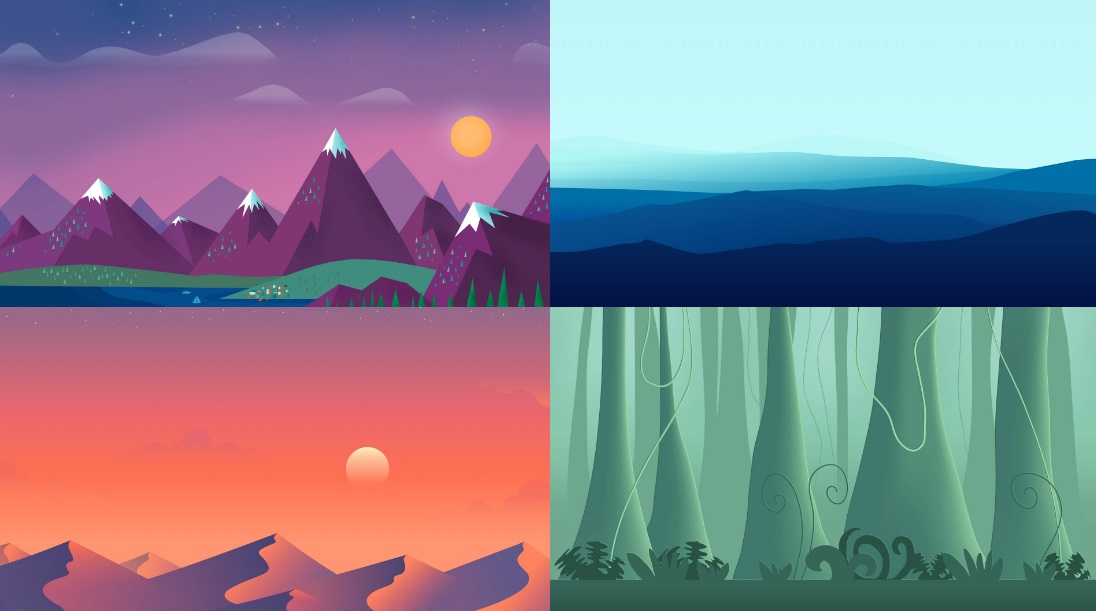
The most popular character (the huskey, who became known as Lexi) was used to shape the narrative of the story and progression mechanic, which was broken up into different levels:
- Learners could unlock the next game after finishing the current one
- Getting 100% on a game would unlock/find one of Lexi's dog friends
- Finding all the dogs would unlock the trophy
- Showing learners a badge after each game if they beat their best time

Games
The learner first had to enter the list of words they wanted to learn. Each game would run through every word in the list and read it aloud and they would have to spell it using the mechanic of the game they were playing.
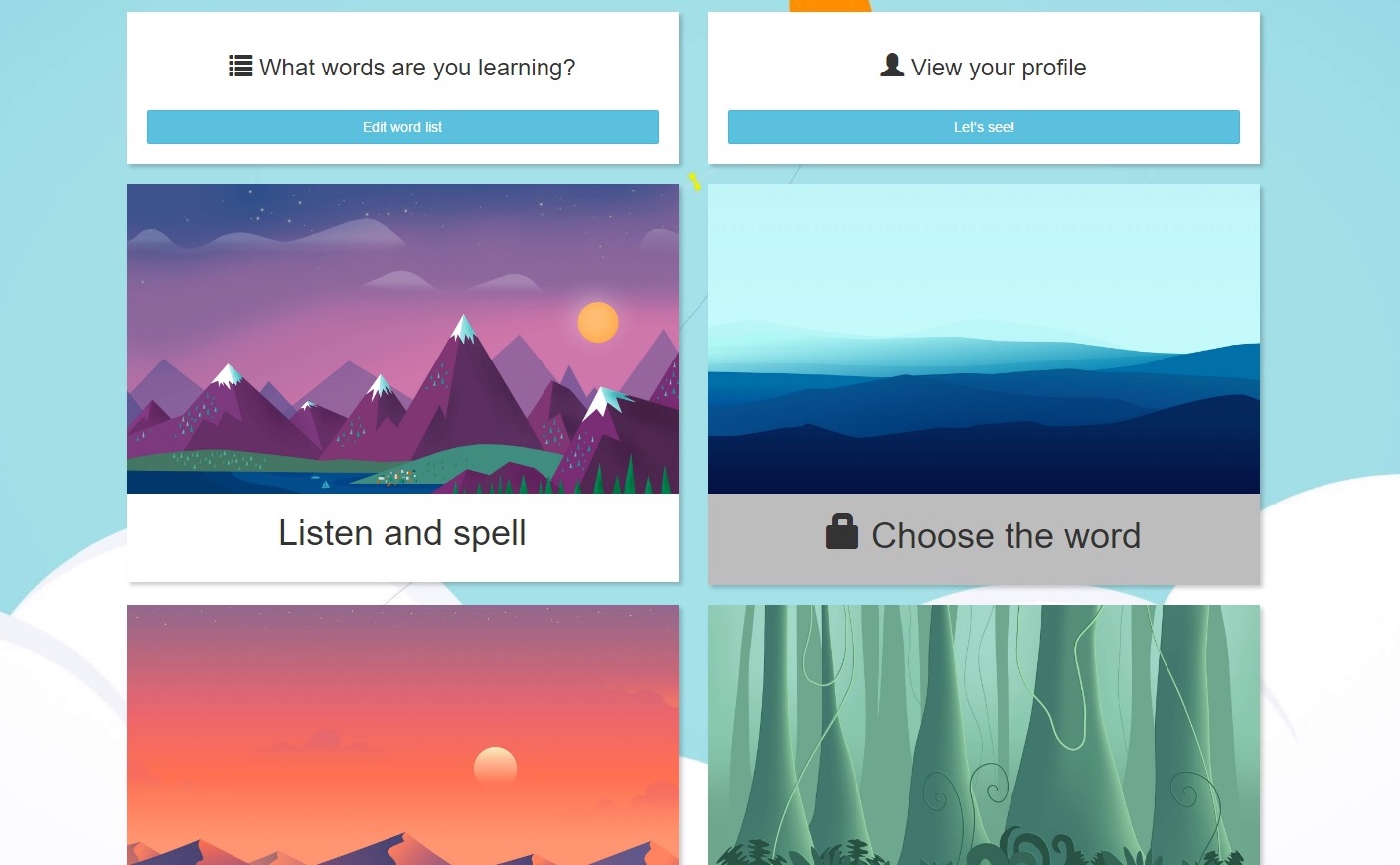
Game 1: Listen and Spell
Simulating the classroom experience, learners would have to just type their answers in. Lots of errors were expected but this gave the opportunity to resurface them in the later games. The aim was to have learners use this as a benchmark test to assess their progress.
Game 2: Choose the Word
A multiple-choice game which presented additional randomly chosen words from a list of generated ones based on letter shuffling, blends (e.g. 'pl', 'pr'), vowel substitutions and previous mistakes.
Game 3: Unscramble
Inspired by "Scrabble", learners had to drag letter tiles from their tray to spell a word. This allowed for the use of upper case letters, which brought more variety in available letter substitutions.
Game 4: Letter Search
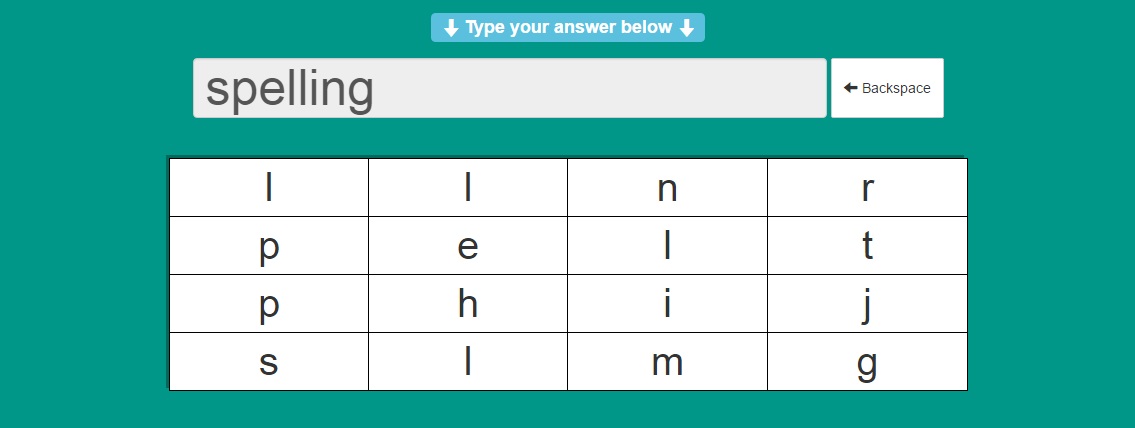
A familiar layout to a word search, a grid of 3x3 - 5x5 letters (depending on the word length) was created and learners had to find the letters to spell the word. The letters and positions changed after every click to make it more engaging.
Feedback
The study group of learners showed, on average, and increase of 57% in accuracy after completing all the games, compared to when they started.
An online survey was also conducted, where the majority of the learners indicated that they enjoyed the combination of the character, rewards, colours and themes in the learning environment.
One learner was not influenced by any of the progression mechanics, while a few others were unsure about what to do at certain stages.
Most importantly, all the learners said that they thought their abilities improved and that it was more fun and effective than their current methods of learning, which were all paper-based.
Based on the selected metrics, the project was considered successful.
See it in Action!
Looking Back Now
Considering this is now almost 8 years old, I don't think it has aged too badly.
I enjoyed the challenge of taking the extensive research I had to do on the subject and trying to come up with creative ways of implementing this in each of the games.
The technology I used drove a lot of the final design, given that I used the Bootstrap CSS framework as the building blocks for most of the interface and whatever JavaScript/jQuery libraries were available to achieve the game mechanics I needed to implement. I do believe limitations bring out the most creative solutions.
This project taught me a lot about the importance of understanding who you are designing a solution for and all the considerations that go into every design decision.